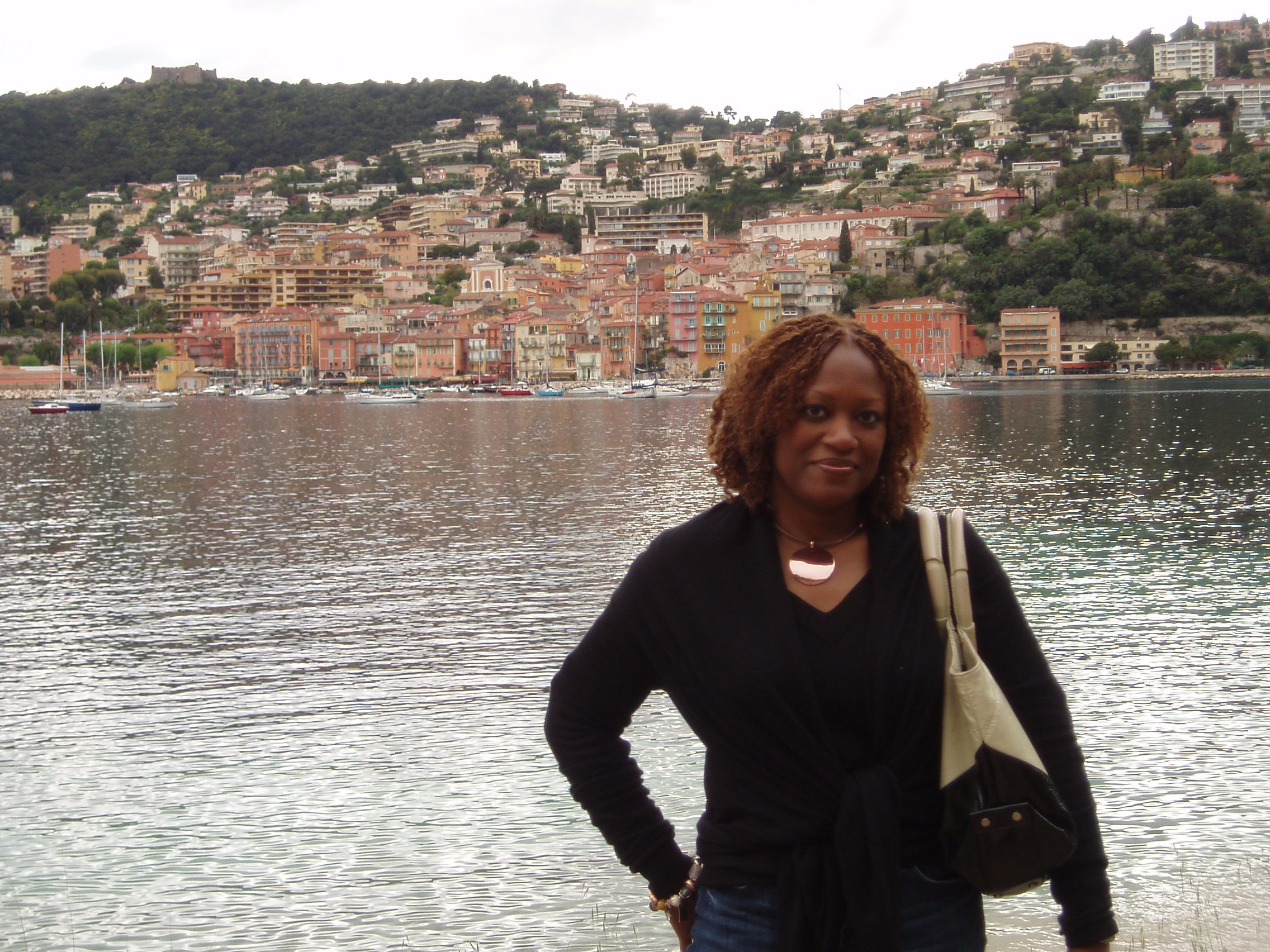
I’ve had this theory for a long time: While we African-Americans sometimes feel our color can be a pseudo-“liability” here in the States, it certainly can be an asset once we leave our native shores and travel abroad. I was reminded of this last week when President Barack Obama gave his potentially game-changing speech in Egypt.
It was a striking sight to see TV cameras pan across the crowd gathered inside Cairo University to hear him. Most of the faces were some shade of brown, from café au lait to cinnamon to chocolate. From just looking at them, any of ‘em could have been a cousin, aunt or uncle of Obama’s. And while few mainstream news outlets have called it as such, one HUGE reason for our president’s broad worldwide appeal is the fact that he looks like so much of the world.
And since people of color make up a majority of the globe’s population, it makes sense. We know Obama’s also beloved in many parts of Europe, but when Latin Americans and Africans and people in the Middle East see this man, in many ways, they see themselves.
Retired South African Archbishop and 1984 Nobel Peace Prize winner Desmond Tutu articulated a similar thought in an Associated Press article published yesterday. Referring to Obama’s upcoming trip to sub-Saharan Africa next month, he said that Obama’s Kenyan roots and ethnicity will automatically give him a level of credibility with African leaders. (Obama will reportedly visit Ghana, his first stop to this region since being elected U.S. president.)
“They can’t accuse him of being a neocolonialist,” Tutu’s quoted saying during a visit to London. “Complexion helps.” (emphasis mine)
It most certainly does—and often, in very tangible ways.
I remember friend Ricki Stevenson, African-American expatriate and founder of the fabulous Black Paris Tours in France, telling me about this phenomenon years ago. Decades earlier, she and her family had lived in the Middle East, and when traveling through airports there, she’d be greeted, “Hello, my sister,” by local employees.
And as comfortable as I have always felt traveling through Europe, the first time I visited a non-Caribbean overseas country and found myself in a place where more of the folks looked like me than NOT was Saudi Arabia. I traveled there in late 2007 during a business trip for my company, decked out throughout the trip in an abaya borrowed from a former Chicago Sun-Times colleague and later in a more opulent one given as a gift from my company’s country executive.
While in Saudi Arabia, I met a businessman who was a dead ringer for my uncle Ras down in Pine Bluff, Ark. I was greeted as “sister” by a traditionally dressed businessman during one of my escorted office-building stops in the big port city of Jeddah. And if I didn’t open my non-Arabic-speaking mouth—except, of course, to utter general courtesies such as “shukran” (thank you) or “Aasalaamu Aleikum” (hello)—I could do a decent job of “blending in.”
While I’ve NEVER been one to suggest African-Americans limit their travel to places where there are other people of color, it’s nice to visit countries where the folks look like they’d be at home at one of your family reunions.
I’ll bet President Obama would agree.