‘Harlem in Montmartre’ retraces musical history of African-Americans in Paris

Don’t know if any of you caught this on PBS stations in the United States last night, but a FABULOUS documentary highlighting called “Harlem in Montmartre” walked viewers through the roots of African-American jazz in Paris and the forces that shaped this incredible musical genre. As many of you know, Paris is my favorite city in the world, the one place I’d choose if told I could never leave. And when there, I love to stroll around the colorful 18th arrondisement where Montmartre, the city quarter spotlighted in the film, is located. 

As the documentary showed, this was where black American musicians, artists and writers often settled when they arrived in the City of Light between the First and Second World Wars. There were nightclubs owned and run by black folks – even strong African-American women like Ada “Bricktop” Smith, whose club was the place to be. It was here that jazz greats like New Orleans native Sidney Bechet earned their fame; where entertainers like the beloved Josephine Baker (whose do-it-your-own-way life story never ceases to amaze and inspire me) performed and hung out. This was no small thing, as these black Americans found a personal and creative freedom they were denied back “home” in the United States. The French embraced them, and African-Americans in Paris embraced them right back. Surely it wasn’t utopia, but compared with an often violent and discriminatory Jim Crow existence in the States, it probably felt like heaven on earth.

I first learned about some of Montmartre’s place in African-American history by taking one of Ricki Stevenson’s Black Paris Tours many years ago. This combination walking-bus-Metro tour not only introduced us to haunts frequented by Baker and writers like James Baldwin and Richard Wright, but gave us the historical context needed to understand just what was so special about this “Harlem Renaissance” on the other side of the Atlantic. For the first time in their lives, these black artists had the freedom and the right to JUST BE.

Even if you’re not a music or jazz enthusiast, you’d find “Harlem in Montmartre” fascinating TV, complete with commentary from both American and French historians and musicologists. (Not sure when PBS will make the video available, but click here to at least view a video excerpt.) Talk about bringing history to life. I’ll bet it makes you want to book an airline ticket to Paris so you can check out this fascinating place for yourself!

And if you DO happen to be a jazz fan, here are a few spots (not located in Montmartre, but throughout Paris) you might want to try:

  • Caveau de la Huchette. Located in the 5th arrondisement on the Left Bank, you’ll listen to jazz in a centuries-old underground cave. Great music, great scene.
  • Au Duc des Lombards. Housed on a street not far from the Pompidou Centre that’s home to a string of quality jazz joints, the Duc is one of the most popular and best-known. (Note: this Web site’s all in French.)
  • Jazz Club Etoile. This spot, located in the Le Meridien Etoile hotel in the 17th arrondisement, used to be known as the "Lionel Hampton Jazz Club." But check it out, as it often hosts top names across genres including soul, blues, gospel and "world music."
  • Anywhere along rue des Lombards. As I mentioned, there’s a host of jazz venues on this street in the very centrally located 1st arrondisement (although I can’t remember all the club names). Even if you don’t have pre-arranged reservations, stroll this street, see who’s playing at the different clubs, and duck inside for an unforgettable cultural experience.

Say amen, sister: Get a spiritual boost by visiting houses of worship when traveling overseas

My mom Gloria stands just outside the Rome Baptist Church during our 2007 trip to the Eternal City for our friend's wedding.
My mom Gloria stands just outside the Rome Baptist Church during our April 2007 trip to the Eternal City for our friend Monica's wedding.
A view from just above the entrance to the Rome Baptist Church, which stands in the charming Piazza San Lorenzo in Lucina, just off one of the poshest shopping streets in town.
Here's Holy Trinity Anglican Church in the gorgeous French Riviera city of Nice. This multiethnic congregation welcomes English-speaking worshippers from all over the world.

I don’t know about you, but I’m often more psyched about going to church on the road than hitting a bunch of must-see museums and boutiques. Although mornings and I have never been friends, when I’m overseas, I make a point of finding an English-speaking service, whether I need to hop on a subway or bus or use my own two feet to get there. I enjoy the religious aspect of worship but for me, it’s also about experiencing local culture in one of its most authentic and expressive ways.

A friend from work recently left on her first trip to Italy, and besides sharing the names of fabulous trattorie, ristoranti and shops, I suggested she stop into St. James Church, which I used to attend during my days of living in Florence. Introduced to St. James by artist friends Louise LeBourgeois and Steven Carrelli from my very own Grace Episcopal Church in downtown Chicago, I found this congregation a beacon of warmth, welcome and friendship. And while its Episcopal worship style is much more “high church” than at Mt. Calvary Baptist which I attended as a kid on the South Side of Chicago, it’s full of international people who speak English – no small thing when you’ve spent the rest of your week struggling through broken Italian! (I still get misty-eyed when I get its weekly e-mails and way jealous when I read about its “day trips” to Assisi and other historic towns.)

One reason I fell so hard for St. James was the soulful singing of the world-traveling Florence Gospel Choir, led by Virginia native Nehemiah Brown. Forget about that old American adage that “11 o’clock Sunday morning is the most segregated hour of the week.” Nehemiah had these Italians, Germans, Brazilians, and a few African-Americans singing gospel classics so passionately they might as well have been in a church in Philadelphia or L.A. (Check out one of their videos here.) And on Sundays when the choir sang, I was transported back to the South Side, where my dad Farnell was a minister of music at Covenant and Baptist churches for nearly 40 years.

Even if we don’t go regularly now, many – if not MOST – of us black folks grew up going to somebody’s church. Besides, even if you’re not super-religious, there’s something special and sacred about being in a house of worship – ANYBODY’S house of worship – even if it’s not a faith tradition you follow. 

It’s all about the idea of FELLOWSHIP, the bringing of people together. That’s why — even if you’re shy or traveling alone — it’s so neat to stop by the “coffee hour” or whatever gathering is held AFTER the service. It’s there you’ll meet church members, many of whom are expats living in their chosen countries and eager to chat about their overseas experiences. And you’ll meet fascinating fellow travelers who, like you, have found sanctuary in this same holy place.

My mom Gloria, a Sunday School teacher for more years that she’d probably want me sharing on this blog, and I love to do this. When in Rome for an Italian friend’s wedding last spring, we made our way to the Rome Baptist Church (no joke!) in a lovely small piazza just off one of the chicest shopping streets in the Eternal City. We sat in on a Sunday School class taught by a wonderful African teacher, met fellow students from South Africa, Nigeria and the States, and enjoyed a morning worship service in the same city where St. Paul was imprisoned, wrote letters that later became books of the Christian New Testament, and likely was martyred.

We did the same thing last fall before leaving Barcelona on a Mediterranean cruise. Taking a cab up this Spanish port city’s winding hills, we found ourselves at the small yet super-friendly St. George’s Church, an Anglican/Episcopal congregation filled with members from across the globe. Not only was this a church I would have been HAPPY to call home if I lived in Barcelona, but these were smart, well-traveled folks who were just as down to earth as any we’d ever met. (And coming on the heels of Barack Obama’s election as president of the United States, we found ourselves embraced by folks who just wanted to talk about the miracle America had just pulled off!) The service itself was spirited but deeply moving, bringing tears to our eyes as we realized the oneness of worshippers, no matter where they live or where their churches may stand.

Now that I think of it, I’ve checked out Holy Trinity Anglican Church in the French Riviera town of Nice. I’ve attended worship at London’s famed Westminster Abbey, where Princess Diana’s seen-all-over-the-world funeral was held. And any time I’m in Paris on a Sunday, I stroll past the super-posh Four Seasons Hotel George V to the American Cathedral in Paris, where I dream of worshipping when I’m someday living in the City of Light.

But in the midst of all the sightseeing in foreign lands, it thrills me to know that God is the same all over the world, that praises are going up in different languages and dialects and still reach heaven the same way.

And that, in the words of my former Baptist pastor, is something to shout about!

Some sisters never more at home than when traveling abroad

Not that I didn’t already know this, but I’m always thrilled to hear about black women out there who, American or other passports in hand, eagerly take off for trips to places where we’re not always sure if there will be lots of other folks who look like “us “when we get there. But we go anyway, and often return home with fresh eyes.

Take American Black Chick in London. We met “virtually” through her fabulous blog of the same name, as she’s finishing up her M.A. dissertation in London this summer and looking for work that will extend her excellent European adventure. Not only do I love her fresh perspective on being a young African-American sister overseas, but admire her fearless spirit, especially when it comes to taking on the world on her own terms.

American Black Chick just got back from a two-week jaunt to Italy, Switzerland and Liechtenstein and dished a bit about the trip. Read about her “random musings,” and her answers to my questions about the “black chick” experience in these three very different countries.

Black women traveling abroad: Learn a foreign country’s social mores, customs before you go

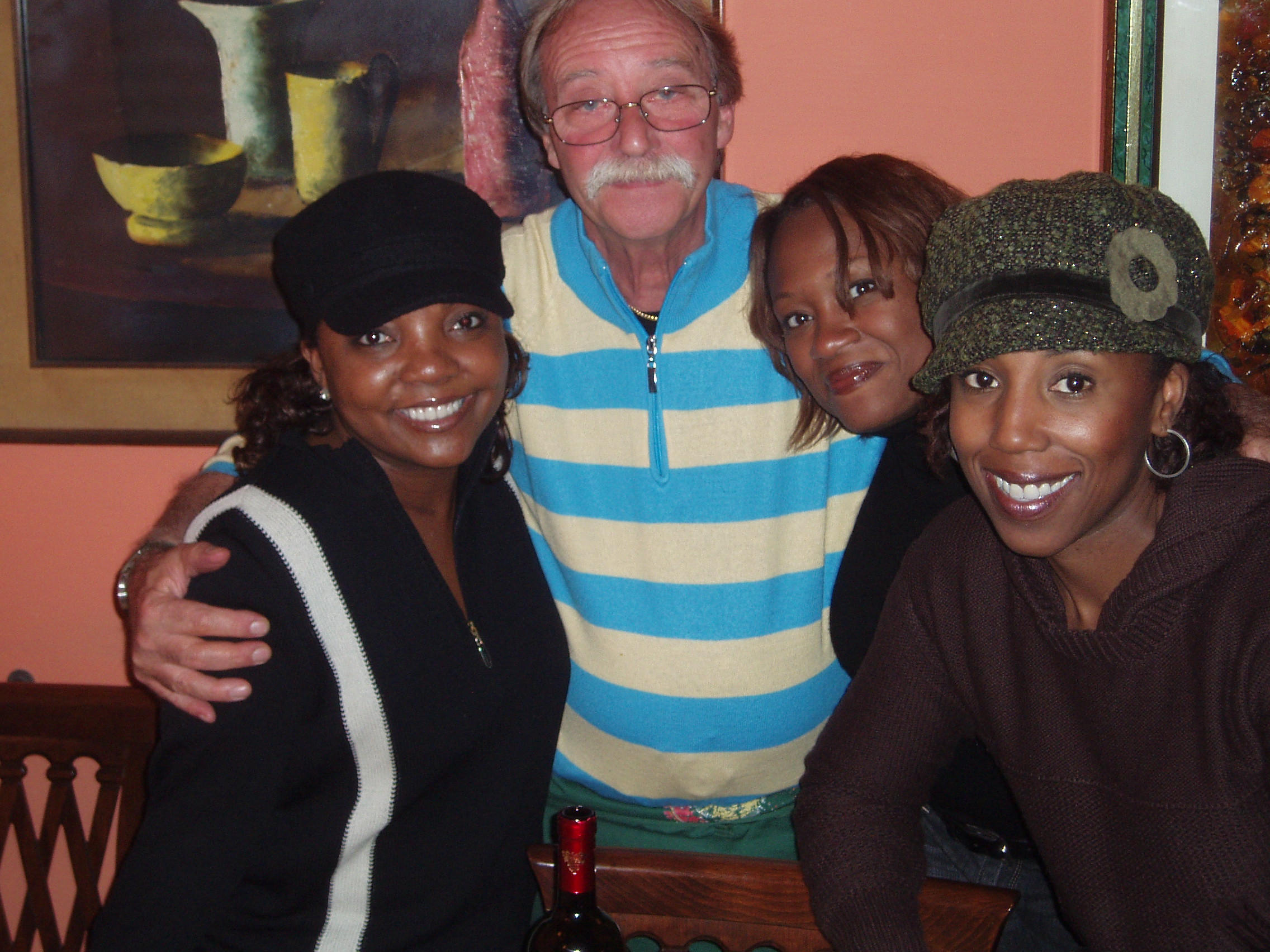
During our trip to Florence, Italy, my friends Carol (far left), Karen (far right) and I embraced the Italian way of life. And as you see here, we found ourselves embraced right back by the super-friendly waiter at Grillo Parlante, a small, locals-only restaurant.
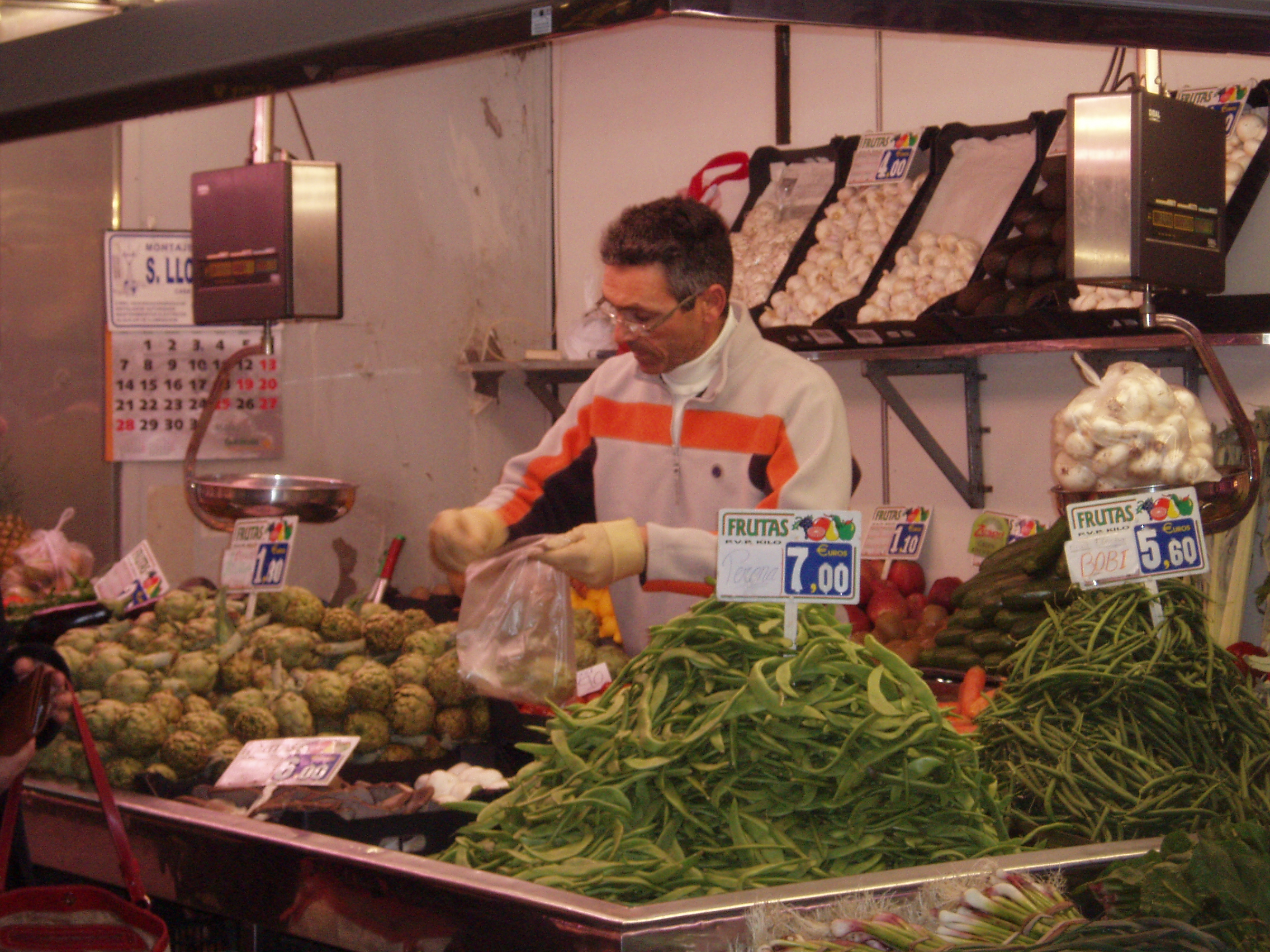
Visiting a country like France, Italy or Spain? Stop into a local market, like the bustling Mercat de la Boquería in Barcelona -- but ask FIRST before handling the merchandise. In many cultures, touching the produce -- or the designer bags and shoes before first asking permission -- is seen as rude.
Visiting a country like France, Italy or Spain? Stop into a local market, like the bustling Mercat de la Boquería in Barcelona -- but ask FIRST before handling the merchandise. In many cultures, touching the produce -- or the designer bags and shoes before first asking permission -- is seen as rude (and in the case of food, simply unsanitary).
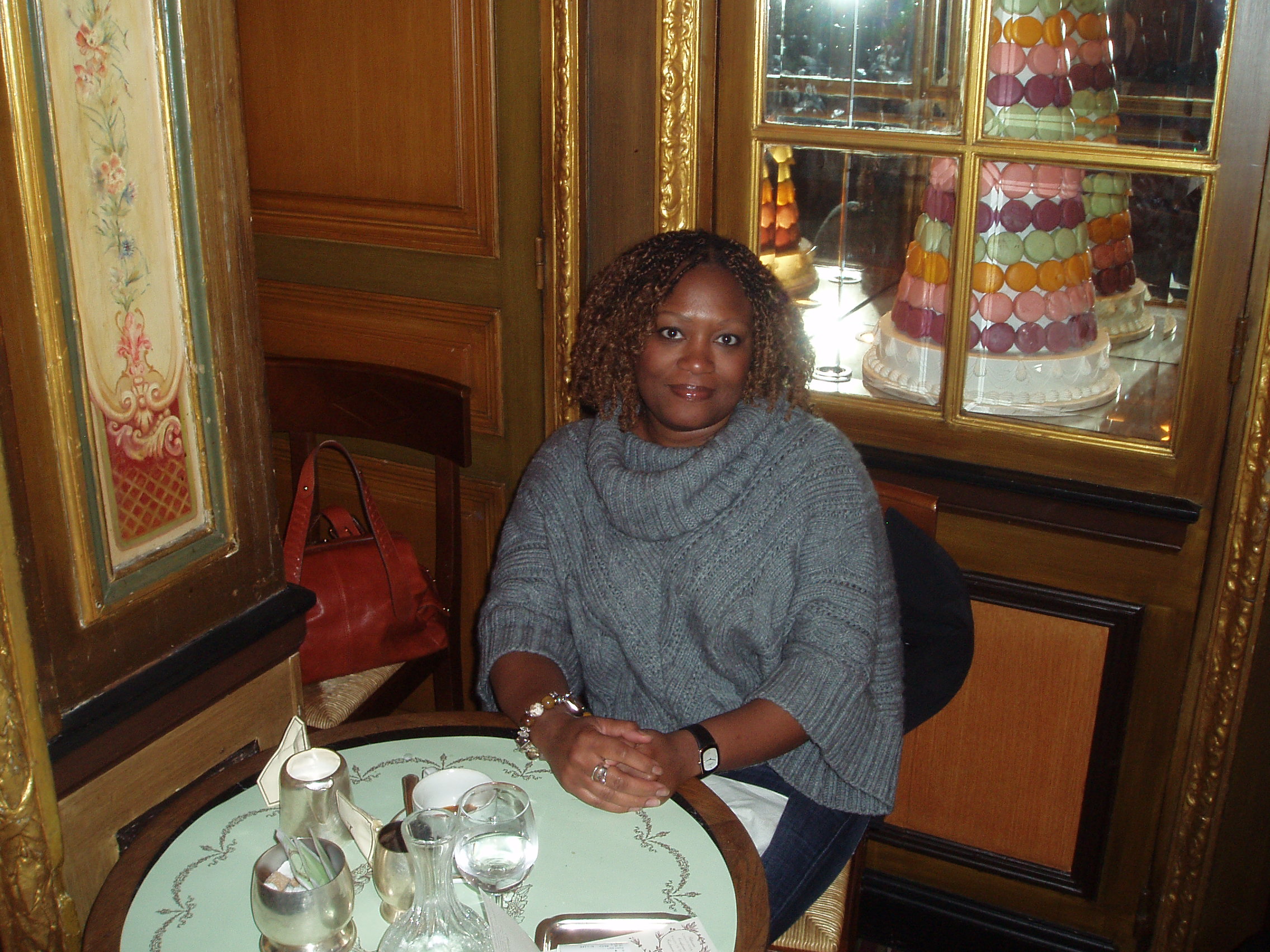
Knowing the social mores of a foreign country or city -- especially when it comes to dining, shopping and socializing -- can make or break your overseas trip. Here I am, finishing lunch at the famed Laduree tea salon in Paris.
Knowing the social mores of a foreign country or city -- especially when it comes to dining, shopping and socializing -- can greatly impact the experiences you have when traveling abroad. Here I am, finishing lunch at the famed Ladurée tea salon in Paris.

At the recent Travel Blog Exchange conference in Chicago, a fellow blogger and I found ourselves discussing why African-American women—even those with the financial means and interest in traveling abroad—don’t do it more often. I often think about this, as I always feel it would be GREAT to see more sisters when I’m running around Italy or Spain either in a group or solo.

For many of us, it’s fear of the unknown. We don’t speak the language; we don’t know anyone in the country we’d like to visit. But in countless conversations I’ve had with African-American women over the years, it comes down to wondering how we’ll be perceived as black people. Even without realizing it, being black in America—whether dirt-poor, comfortably affluent like “The Cosby Show” Huxtables, or “movin’ on up” like the Jeffersons—means wearing the subconscious burden of potential discrimination on our backs like the latest designer dress.

Any time a salesclerk at a store is slow to help us, we often assume it’s because we’re black. Get a bad table in a restaurant? The hostess must be a bigot. Living in America, we spend more time than we’d like to admit wonder when the legacy of centuries of racism will smack us in the face. So there’s little wonder that when we DO leave the United States those of us who can afford to travel would rather jet off to the Caribbean, where islands teem with brown-skinned folks just like us, rather than potentially inviting discrimination (and in languages we don’t understand, no less) by flying off to Europe or South America or Australia.

But after countless trips abroad, I’m convinced that one reason we sisters sometimes feel we’ve been slighted overseas is because we don’t understand “how to be” (I’m borrowing this phrase from the book penned by author and Ebony Magazine Creative Director Harriette Cole) or understand how other folks ARE.

I think about a trip to Paris some years ago with two close girlfriends, when we often found ourselves stared at by Parisians in bistros and on trains. We laughed and talked loudly everywhere we went; after a meal, we’d whip out our compacts and lipstick and powder at the table. I figured those Parisians just couldn’t keep their eyes off these three beautiful black sisters out on the town. I later found out—probably years after the fact—that French women rarely reapply cosmetics in public. Instead, they slip out to the toilette to prettify themselves. And in a country where privacy is prized, conversations—even animated ones—are kept to a much lower decibel so that an entire room isn’t privy to a stranger’s every word.

That’s why I love Ricki Stevenson of “Black Paris Tours.” Besides showing folks on her half- or full-day tours where Josephine Baker, James Baldwin, and Richard Wright used to live, write and perform, she ALWAYS gives a little social primer first. She advises her guests to say, “Bonjour, madame” or “Bonjour, monsieur” upon entering a store or restaurant, and to always say “Au revoir” upon leaving. It seems like a small thing, but it’s HUGE to French people who pride themselves on their civil society. And like it or not, we do represent “our people” and our country when we travel abroad, so why not become positive ambassadors while we’re there?

But back to the confab between my fellow Travel Blog Exchange seatmate and me. She told me about some black friends who’d recently visited Paris and came home feeling they’d been ignored and treated rudely by the French. But she and I wondered: Did they do the small things, acknowledging the salesclerks when entering and leaving a store? Did they walk right into boutiques or up to a food market and start touching the merchandise without first asking permission? (I know—it sounds foreign to us in the States, but that’s what EVERYONE does in countries like Italy and France as common courtesy.) Did they at least TRY to speak a few words of French before launching into questions in English? (But Lord knows it’s not just us black folks guilty of doing that overseas!) And did they realize that just because waiters don’t hover over your table or return frequently as they often do in the States, they’re not being rude but giving you unhurried space in which to slowly savor your meal?

Just as we don’t like it when foreign tourists stand too close to us on American buses and streets, we should do a mental role-reversal when we travel to OTHER folks’ lands and try to find out what’s appropriate and what’s not before we board that plane overseas. Now if we TRULY feel we’ve been discriminated against, then we should by all means speak up and complain. But let’s not automatically assume that every perceived slight has a racial tinge to it. A little understanding can go a long way to shrinking global differences—and to ensuring that your trip abroad is a fabulous one!

I’d love to hear from you: Have you ever unwittingly found yourself violating some “social code” overseas? How did you find out that your behavior was outside the norm—and were you able to change it during that trip? We’ve all been there, so please share!

The world in Chicago for Travel Blog Exchange ’09 conference

Flight attendant blogger Heather Poole (www.gadling.com) and 'round-the-world blogger Matt Kepnes (at the enigmatic www.nomadicmatt.com) shared thoughts on "Creating a Lively and Successful Travel Blog" during one of TBEX '09's lively panel discussions.
Flight attendant blogger Heather Poole (www.gadling.com and www.HeatherPoole.com) and 'round-the-world blogger Matt Kepnes (www.nomadicmatt.com) shared thoughts on "Creating a Lively and Successful Travel Blog" during one of TBEX '09's lively panel discussions.

When you’re a writer, there’s nothing like surrounding yourself with likeminded people to get and stay inspired. And this past Sunday, I found inspiration that’ll keep me jazzed for weeks and months to come at Travel Blog Exchange ’09, a fabulous (and FREE, thanks to generous sponsors!) daylong conference in downtown’s Chicago Cultural Center. About 100 veteran and newbie travel bloggers (I’m one of the latter) from all across the globe (they came from as far away as Laos and Chile!) showed up for an incredible day of panel discussions on everything from whether travel blogs and travel journalism should be held to the same standards (of course, this reporter says YES!) to creating compelling podcasts and video for our sites. The event was organized by bloggers extraordinaire Kim Mance and Debbie Dubrow and hosted by Travel Blog Exchange, which functions as a virtual meetinghouse for all things blog- and travel-related, and gives those of us with specific passions (such as Bloggers Based in Europe, Solo Travelers, Vegetarian and Vegan Travel) a forum for interacting and sharing across hemispheres and global time zones.

And while the info exchanged and shared was great, even BETTER was the chance to meet a super-cool, smart and worldly group of bloggers and journalists who sleep, drink and eat travel and see that as a way to connect us all in ways that probably seemed impossible just 10 years ago. The Travel Blog Exchange Web site says it best: travel bloggers and writers “are a unique breed of people, part explorer, part chronicler, all insatiable curiosity.”

Since TBEX, I’ve checked out their fabulous blogs, gotten big-time encouragement about UrbanTravelGirl, and even found myself invited to Santiago, Chile, by a fellow blogger who lives in this South American city. (Anyone who knows me well knows never to extend an invitation unless you REALLY want me to show up… because I WILL!)

Over time, I’ll be asking some of these incredible folks to “guest blog” here on UrbanTravelGirl, sharing their perspectives about why global connections are so critical, especially now in our increasingly small world. 

Going to events like these helps me remember why I LOVE travel, why I’m willing to spend most of my disposable dollars to see the world – and they remind me of the power of WORDS. As someone who writes not just for a salary but because it’s the most soul-fulfilling work I know, it was the best possible way to spend a Sunday in Sweet Home Chicago.