Say amen, sister: Get a spiritual boost by visiting houses of worship when traveling overseas

My mom Gloria stands just outside the Rome Baptist Church during our 2007 trip to the Eternal City for our friend's wedding.
My mom Gloria stands just outside the Rome Baptist Church during our April 2007 trip to the Eternal City for our friend Monica's wedding.
A view from just above the entrance to the Rome Baptist Church, which stands in the charming Piazza San Lorenzo in Lucina, just off one of the poshest shopping streets in town.
Here's Holy Trinity Anglican Church in the gorgeous French Riviera city of Nice. This multiethnic congregation welcomes English-speaking worshippers from all over the world.

I don’t know about you, but I’m often more psyched about going to church on the road than hitting a bunch of must-see museums and boutiques. Although mornings and I have never been friends, when I’m overseas, I make a point of finding an English-speaking service, whether I need to hop on a subway or bus or use my own two feet to get there. I enjoy the religious aspect of worship but for me, it’s also about experiencing local culture in one of its most authentic and expressive ways.

A friend from work recently left on her first trip to Italy, and besides sharing the names of fabulous trattorie, ristoranti and shops, I suggested she stop into St. James Church, which I used to attend during my days of living in Florence. Introduced to St. James by artist friends Louise LeBourgeois and Steven Carrelli from my very own Grace Episcopal Church in downtown Chicago, I found this congregation a beacon of warmth, welcome and friendship. And while its Episcopal worship style is much more “high church” than at Mt. Calvary Baptist which I attended as a kid on the South Side of Chicago, it’s full of international people who speak English – no small thing when you’ve spent the rest of your week struggling through broken Italian! (I still get misty-eyed when I get its weekly e-mails and way jealous when I read about its “day trips” to Assisi and other historic towns.)

One reason I fell so hard for St. James was the soulful singing of the world-traveling Florence Gospel Choir, led by Virginia native Nehemiah Brown. Forget about that old American adage that “11 o’clock Sunday morning is the most segregated hour of the week.” Nehemiah had these Italians, Germans, Brazilians, and a few African-Americans singing gospel classics so passionately they might as well have been in a church in Philadelphia or L.A. (Check out one of their videos here.) And on Sundays when the choir sang, I was transported back to the South Side, where my dad Farnell was a minister of music at Covenant and Baptist churches for nearly 40 years.

Even if we don’t go regularly now, many – if not MOST – of us black folks grew up going to somebody’s church. Besides, even if you’re not super-religious, there’s something special and sacred about being in a house of worship – ANYBODY’S house of worship – even if it’s not a faith tradition you follow. 

It’s all about the idea of FELLOWSHIP, the bringing of people together. That’s why — even if you’re shy or traveling alone — it’s so neat to stop by the “coffee hour” or whatever gathering is held AFTER the service. It’s there you’ll meet church members, many of whom are expats living in their chosen countries and eager to chat about their overseas experiences. And you’ll meet fascinating fellow travelers who, like you, have found sanctuary in this same holy place.

My mom Gloria, a Sunday School teacher for more years that she’d probably want me sharing on this blog, and I love to do this. When in Rome for an Italian friend’s wedding last spring, we made our way to the Rome Baptist Church (no joke!) in a lovely small piazza just off one of the chicest shopping streets in the Eternal City. We sat in on a Sunday School class taught by a wonderful African teacher, met fellow students from South Africa, Nigeria and the States, and enjoyed a morning worship service in the same city where St. Paul was imprisoned, wrote letters that later became books of the Christian New Testament, and likely was martyred.

We did the same thing last fall before leaving Barcelona on a Mediterranean cruise. Taking a cab up this Spanish port city’s winding hills, we found ourselves at the small yet super-friendly St. George’s Church, an Anglican/Episcopal congregation filled with members from across the globe. Not only was this a church I would have been HAPPY to call home if I lived in Barcelona, but these were smart, well-traveled folks who were just as down to earth as any we’d ever met. (And coming on the heels of Barack Obama’s election as president of the United States, we found ourselves embraced by folks who just wanted to talk about the miracle America had just pulled off!) The service itself was spirited but deeply moving, bringing tears to our eyes as we realized the oneness of worshippers, no matter where they live or where their churches may stand.

Now that I think of it, I’ve checked out Holy Trinity Anglican Church in the French Riviera town of Nice. I’ve attended worship at London’s famed Westminster Abbey, where Princess Diana’s seen-all-over-the-world funeral was held. And any time I’m in Paris on a Sunday, I stroll past the super-posh Four Seasons Hotel George V to the American Cathedral in Paris, where I dream of worshipping when I’m someday living in the City of Light.

But in the midst of all the sightseeing in foreign lands, it thrills me to know that God is the same all over the world, that praises are going up in different languages and dialects and still reach heaven the same way.

And that, in the words of my former Baptist pastor, is something to shout about!
Black women traveling abroad: Learn a foreign country’s social mores, customs before you go

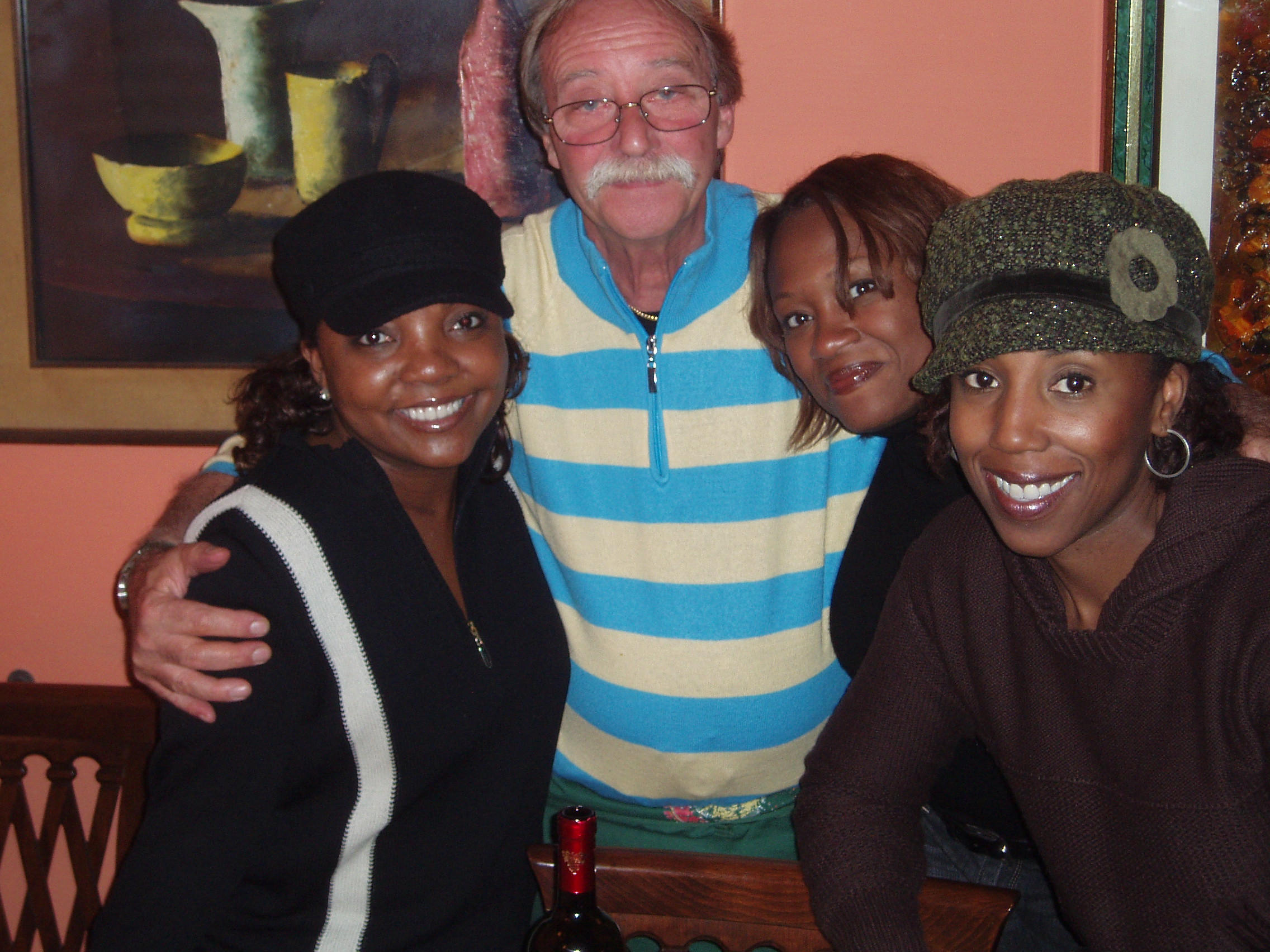
During our trip to Florence, Italy, my friends Carol (far left), Karen (far right) and I embraced the Italian way of life. And as you see here, we found ourselves embraced right back by the super-friendly waiter at Grillo Parlante, a small, locals-only restaurant.
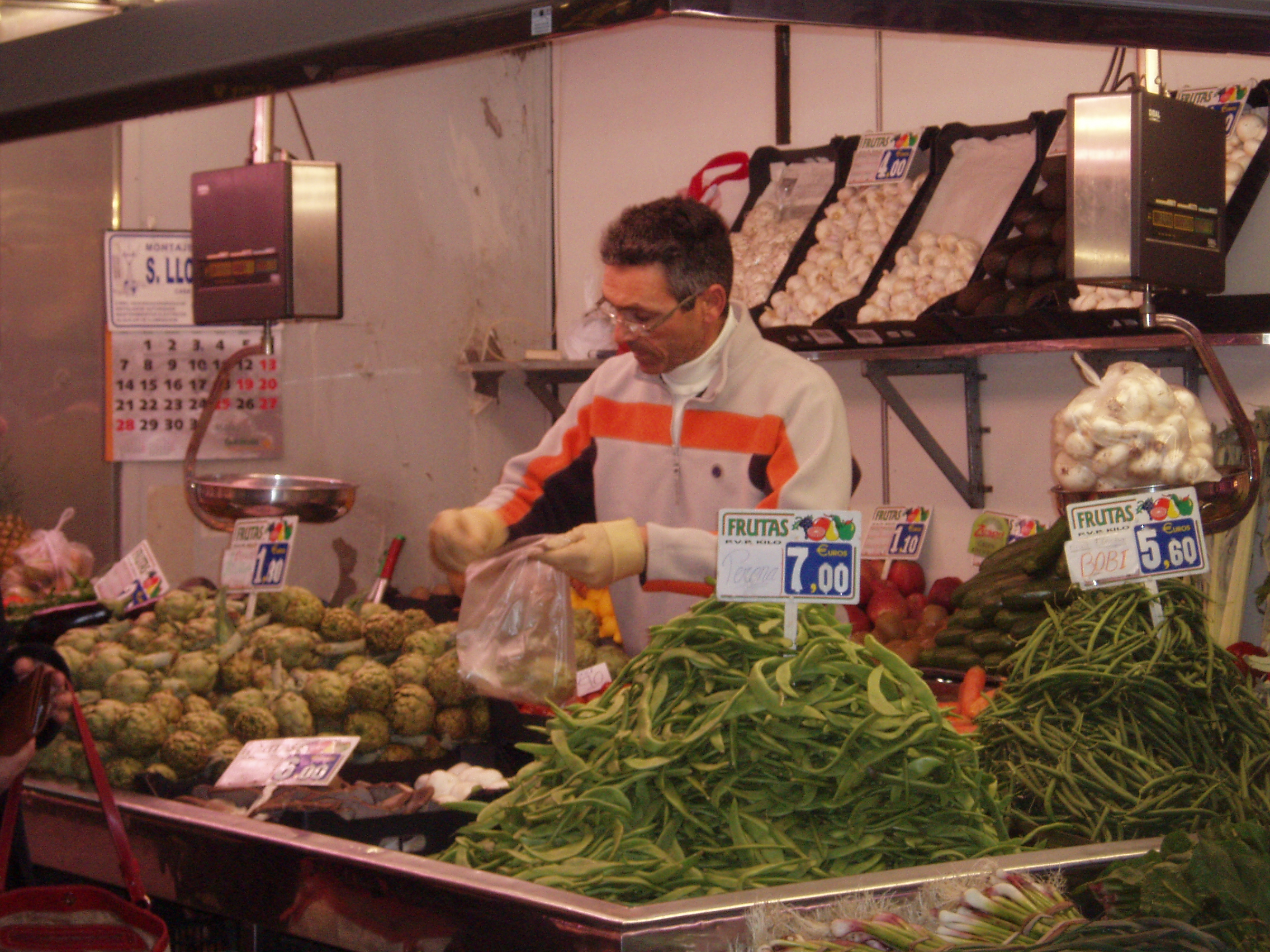
Visiting a country like France, Italy or Spain? Stop into a local market, like the bustling Mercat de la Boquería in Barcelona -- but ask FIRST before handling the merchandise. In many cultures, touching the produce -- or the designer bags and shoes before first asking permission -- is seen as rude.
Visiting a country like France, Italy or Spain? Stop into a local market, like the bustling Mercat de la Boquería in Barcelona -- but ask FIRST before handling the merchandise. In many cultures, touching the produce -- or the designer bags and shoes before first asking permission -- is seen as rude (and in the case of food, simply unsanitary).
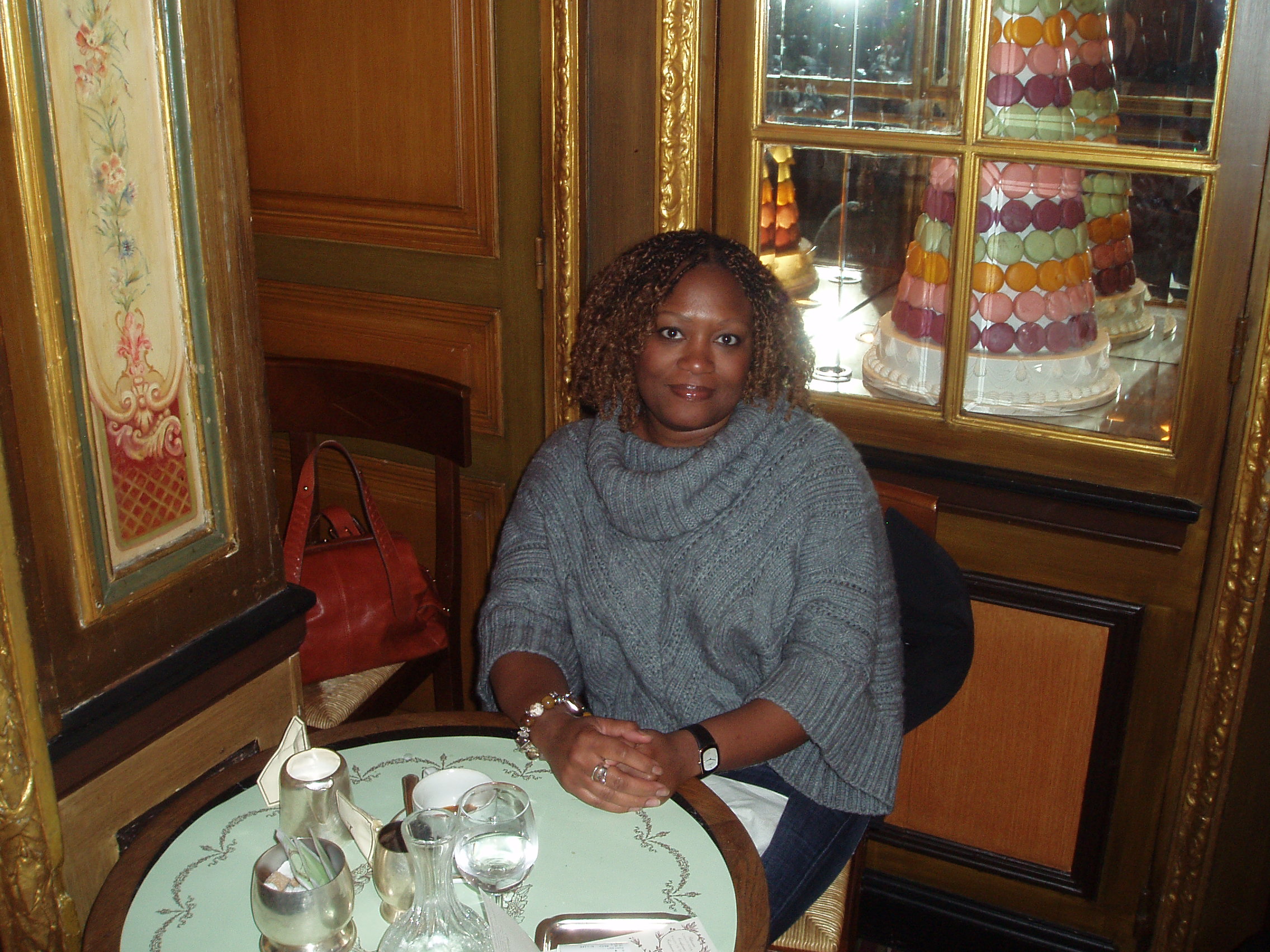
Knowing the social mores of a foreign country or city -- especially when it comes to dining, shopping and socializing -- can make or break your overseas trip. Here I am, finishing lunch at the famed Laduree tea salon in Paris.
Knowing the social mores of a foreign country or city -- especially when it comes to dining, shopping and socializing -- can greatly impact the experiences you have when traveling abroad. Here I am, finishing lunch at the famed Ladurée tea salon in Paris.

At the recent Travel Blog Exchange conference in Chicago, a fellow blogger and I found ourselves discussing why African-American women—even those with the financial means and interest in traveling abroad—don’t do it more often. I often think about this, as I always feel it would be GREAT to see more sisters when I’m running around Italy or Spain either in a group or solo.

For many of us, it’s fear of the unknown. We don’t speak the language; we don’t know anyone in the country we’d like to visit. But in countless conversations I’ve had with African-American women over the years, it comes down to wondering how we’ll be perceived as black people. Even without realizing it, being black in America—whether dirt-poor, comfortably affluent like “The Cosby Show” Huxtables, or “movin’ on up” like the Jeffersons—means wearing the subconscious burden of potential discrimination on our backs like the latest designer dress.

Any time a salesclerk at a store is slow to help us, we often assume it’s because we’re black. Get a bad table in a restaurant? The hostess must be a bigot. Living in America, we spend more time than we’d like to admit wonder when the legacy of centuries of racism will smack us in the face. So there’s little wonder that when we DO leave the United States those of us who can afford to travel would rather jet off to the Caribbean, where islands teem with brown-skinned folks just like us, rather than potentially inviting discrimination (and in languages we don’t understand, no less) by flying off to Europe or South America or Australia.

But after countless trips abroad, I’m convinced that one reason we sisters sometimes feel we’ve been slighted overseas is because we don’t understand “how to be” (I’m borrowing this phrase from the book penned by author and Ebony Magazine Creative Director Harriette Cole) or understand how other folks ARE.

I think about a trip to Paris some years ago with two close girlfriends, when we often found ourselves stared at by Parisians in bistros and on trains. We laughed and talked loudly everywhere we went; after a meal, we’d whip out our compacts and lipstick and powder at the table. I figured those Parisians just couldn’t keep their eyes off these three beautiful black sisters out on the town. I later found out—probably years after the fact—that French women rarely reapply cosmetics in public. Instead, they slip out to the toilette to prettify themselves. And in a country where privacy is prized, conversations—even animated ones—are kept to a much lower decibel so that an entire room isn’t privy to a stranger’s every word.

That’s why I love Ricki Stevenson of “Black Paris Tours.” Besides showing folks on her half- or full-day tours where Josephine Baker, James Baldwin, and Richard Wright used to live, write and perform, she ALWAYS gives a little social primer first. She advises her guests to say, “Bonjour, madame” or “Bonjour, monsieur” upon entering a store or restaurant, and to always say “Au revoir” upon leaving. It seems like a small thing, but it’s HUGE to French people who pride themselves on their civil society. And like it or not, we do represent “our people” and our country when we travel abroad, so why not become positive ambassadors while we’re there?

But back to the confab between my fellow Travel Blog Exchange seatmate and me. She told me about some black friends who’d recently visited Paris and came home feeling they’d been ignored and treated rudely by the French. But she and I wondered: Did they do the small things, acknowledging the salesclerks when entering and leaving a store? Did they walk right into boutiques or up to a food market and start touching the merchandise without first asking permission? (I know—it sounds foreign to us in the States, but that’s what EVERYONE does in countries like Italy and France as common courtesy.) Did they at least TRY to speak a few words of French before launching into questions in English? (But Lord knows it’s not just us black folks guilty of doing that overseas!) And did they realize that just because waiters don’t hover over your table or return frequently as they often do in the States, they’re not being rude but giving you unhurried space in which to slowly savor your meal?

Just as we don’t like it when foreign tourists stand too close to us on American buses and streets, we should do a mental role-reversal when we travel to OTHER folks’ lands and try to find out what’s appropriate and what’s not before we board that plane overseas. Now if we TRULY feel we’ve been discriminated against, then we should by all means speak up and complain. But let’s not automatically assume that every perceived slight has a racial tinge to it. A little understanding can go a long way to shrinking global differences—and to ensuring that your trip abroad is a fabulous one!

I’d love to hear from you: Have you ever unwittingly found yourself violating some “social code” overseas? How did you find out that your behavior was outside the norm—and were you able to change it during that trip? We’ve all been there, so please share!

Michael Jackson’s lasting gift to black ‘citizens of the world’

As has everyone I know, I’ve been obsessively tuning into print, TV and Internet coverage of the horribly tragic, sad and untimely death of pop icon Michael Jackson. Back in the day, I was a huge Michael fan (before he morphed into someone unrecognizable). I still love his songs, and have found myself mindlessly humming and singing along with “Wanna Be Startin’ Somethin’,” “Don’t Stop ‘Til You Get Enough,” “The Lady in My Life,” and the telling “Black or White.”

But being a journalist who’s always searching for the sociological meaning and truth behind current events—and goodness knows this is the biggest global one since Barack Obama was elected president of the United States—I see Michael far beyond the off-the-charts performances, fantastically creative music and videos, and even the eccentricities that defined his later years.

Over the past few days, I’ve heard it stated by everyone from the Rev. Al Sharpton to former “CBS Evening News” anchor Dan Rather that Michael Jackson’s most lasting legacy to the world won’t be the impressive fact that he “desegregated” MTV back in the early 1980s. Not that he revolutionized the music video medium as we knew it. But the fact that he was the first African-American artist to achieve true global superstardom without constantly reminding folks he was black. These social critics—and I concur—changed the world by paving the way for global audiences to embrace and accept Chicago Bulls basketball phenom Michael Jordan. Multimedia mogul Oprah Winfrey, another black star who found her fame in my hometown Windy City. Golf genius Tiger Woods, who while still early in his career has permanently redefined his sport. And the third member of the Chicago trifecta, President Obama, who has ignited the world’s imagination in a way unlike any politician in my 40-year-old lifetime.

Now you say, what does this have to do with international travel? I say it has EVERYTHING to do with it.

Those of us who live in America often forget that what this country exports better than anything is its popular culture. Folks from Dublin to Dubai, from Buenos Aires to Beijing, form their impressions of America—and most certainly of AFRICAN-AMERICANS—from the musicians, actors, and more recently politicians we set upon pedestals. So when those of us African-Americans who DO travel go abroad, much of how we’re greeted has been shaped by the cultural forces that came before us. As I’ve written before in this blog, foreign nationals on cruise ships, regular folks in France, Italy, Turkey and Greece seem to feel an affinity for us (and perhaps these days for Americans of all colors) because of President Obama, a black American man of whom we can all be proud.

And long before any of us had ever heard Obama’s name, there was a performing sensation named Michael Jackson who made it “cool” to be black in countries where they’d probably never seen an African-American up close-and-personal. So beyond the music and the Moonwalk, those of us who consider ourselves citizens of the world can thank MJ for breaking down barriers long before we and our passports made it overseas.

"Obama: Savior of the world… and America?"


This image says it all, doesn't it? Many French people I talked to seem to have as much invested in an Obama presidency as we Americans do.
This image from Dorothy's Gallery pretty much says it all, doesn't it? Many French people I talked to seem to have as much invested in an Obama presidency as we Americans do.

p1080854

These works from artist Cyril Anguelidis are part of the “Barack Obama President A United World” exposition at Paris’s Dorothy’s Gallery. The one on the left is titled “Super Oba;” the one on the right is simply called “Yes We Can.” Both have been used as posters promoting this stellar exposition through Jan. 26 — and they capture the world’s hope for Barack Obama’s presidency.


“Obama: Savior of the world… and America?” So read the translation from a recent front-page story on a French publication during my time in Paris, the second half of my solo 40th birthday adventure.

This headline may be taking the “hope” message to an extreme, but what a wonderful time to be an American abroad again. 

And what a great time to be an AFRICAN-AMERICAN out in the world.

Since the election of Barack Obama, who’ll be the United States’ first president of acknowledged African descent, folks all over the globe certainly see America in a brand-new light. FINALLY, by electing this black man, we lived up to the platitudes and ideals the nation had been claiming for more than 200 years. We all saw the celebrations beamed from ‘round the world on Election Night – people hugging and crying in Australia, dancing in the streets in Kenya, celebrating after staying up all night long across Europe. But until you’re out in these countries, meeting “real people” who continue to gush about our president-elect, it doesn’t quite hit you just how negatively America has impacted the world over the past eight years – and how much HOPE people have invested in his impending presidency. Just like many of us in the States, they can’t wait for Jan. 20! And we American globetrotters no longer have to be apologists for our country’s policies, or ashamed of our president.

What’s heartening to me as a Chicagoan that now, when I mention my Midwest hometown, the first thing people around the world say is, “OBAMA!!” It’s no longer about Michael Jordan or gangster Al Capone. No, it is the Hawaiian-born former senator who is truly Chicago’s, and the world’s, rock star. Back in May, I remember talking (in terribly broken French) to a housekeeper in my small Parisian hotel who was thrilled about Obama’s chances. My mom and I took a Mediterranean cruise in late November and met people in Italy, in Turkey, in Greece, who couldn’t be prouder of America’s presidential choice. Even an Indonesian waiter on the cruise ship beamed, knowing that Barack Hussein Obama spent some early growing-up years in his native land. This American president truly belongs to the world.

During this birthday trip to France, I had incredibly thoughtful conversations with Europeans about Obama’s election, with them asking I had been “in the park” (my mom and I were!) on that magical Nov. 4th night in Chicago. It happened in Ventimiglia, Italy, where Ristorante Miramare’s young signore and I bonded over talk about the incoming president. In Villefranche, where a waiter at Le Cosmo Restaurant saluted me with, “Yes, we can!” after learning I was from the Windy City. I discussed Obama with my “magic hands” masseur in Paris. With a genteel older Frenchwoman dining next to me at famed tea house Ladureé. At Chez Vong, my favorite Chinese restaurant in Paris, where the waiters instantly piped up, “OBAMA!” after hearing my hometown. And during a home-cooked meal in Villefranche with three wonderful new friends from Ireland (on my 40th birthday, no less!), Olivia, Paddy and Grainne talked at length about our hopes and our fears for Obama’s presidency, one we truly believe can change the world. 

The global nature of this movement truly hit home for me at Dorothy’s Gallery in Paris. A tucked-away enclave in the bustling Bastille quartier , the gallery is owned by Dorothy Polley, an expatriate American who lives in France. During my stay in Paris, I checked out “Barack Obama President A United World,” the gallery’s second and marvelously uplifting “exposition” on the globe-changing election of this man. As you’ll see here, it featured paintings, photographs, sculptures, and even videos from 30 artists around the world — including African-American artist Ealy Mays — on the impact Obama’s ascent has had on the world. It should humble American leaders – and us as regular Americans – that the decisions we make and the votes we cast have more impact on our fellow world citizens than we’ll ever know. And that’s another reason travel is so key in this age of shrinking borders. Rather than just viewing the world’s reaction on CNN, we get to shake hands with it, discuss it, and see it up close in people’s hopeful eyes.

YES, God bless America!

Ringing in my fourth decade in (French) style


 Is this place gorgeous or what? A seafront view of Villefranche, one seen by cruise ship passengers who disembark here for day trips on the French Riviera.
Is this place gorgeous or what? A seafront view of Villefranche-sur-Mer, one seen by cruise ship passengers who disembark here for day trips on the French Riviera.


The compact Villefranche sur Mer train station that transported me around the French Riviera (or Cote d'Azur, as it's called in French) -- and even across the border to Italy. The local trains were on strike during my visit, making for some challenging travel!
The compact Villefranche-sur-Mer train station that transported me around the French Riviera (or Cote d'Azur, as it's called en francais) -- and even across the border to Italy. The local trains were on strike during my visit, making for some challenging travel!
Villefranche became my base for exploring the Cote d'Azur... and one train-enabled day trip took me to the charming town of Antibes (shown here), as well as the larger cities of Nice and Marseille.

I don’t usually get hyped up about birthdays, but it’s not everyday you turn 40. And since I’ll take any excuse to take a foreign trip, I wanted to ring in this Jan. 4 somewhere abroad. Of course, I love Italy to death, am newly fascinated with Greece after stopping there twice with my mom during a 12-day cruise in November… but somehow, my mind kept drifting back to France. Paris is my all-time favorite city, but I felt like I needed to kick off this new year somewhere new. Different, yet romantic and ideally, Mediterranean. While reading one of my favorite twice-weekly e-mails from Adrian Leeds’ Parler Paris newsletter , I saw a listing for “Riviera Experience ,” an assortment of vacation apartments in the charming French Riviera town of Villefranche-sur-Mer, owned and managed by a super-friendly American expat named Shelley Benton. I checked out her Web site, drooled over the incredible apartments – and was immediately hooked!

Those who know me well realize that while I enjoy traveling with family members and friends, I’m equally fond of setting off on my own. And from the start, this 40th birthday getaway felt like one I needed to take alone. I’m thrilled about turning 40 (even though I must admit, it feels strange to type out the number!), and see the start of my fourth decade as a great time for introspection. It’s probably my last best chance to figure out who and what I want to be when I grow up. Do-overs have pretty much run out at this point, so I thought two weeks in a gorgeous place surrounded by folks who’ve long ago mastered that whole “work-life balance” thing was just what the doctor ordered.

While my trip began in Shelley’s to-die-for “Artist’s Atelier ” apartment, right in the center of vieux (old) Villefranche, all roads eventually lead me to Paris, which is where I’ll spend the last four nights of my turning-40 adventure. I’m renting another one of Parler Paris’ stunning apartments in the hopping Marais district, a place I’m sure will inspire and dazzle me just as this city always does.

Perhaps 40 really will be the “new 30” for me – but only if I get to take the hard-knocks wisdom I’ve earned over the last decade with me into my fourth. One thing that’ll certainly go with me into my 40s – a never-ending sense of wanderlust and desire to experience life abroad as often, and as authentically, as possible.